

Invisalign vs Braces: Which One Is Right for You? (2026 Guide)
If you’re considering straightening your teeth, you’re faced with a choice that seemed impossible a generation ago: traditional braces or Invisalign?
The decision feels personal, but it’s actually pretty straightforward once you understand the differences. This guide breaks down Invisalign vs braces across cost, effectiveness, comfort, lifestyle impact, and when each is the better choice.
By the end, you’ll know exactly which option fits your situation—and you won’t second-guess yourself.
Invisalign vs Braces: The Core Differences
Let’s start with the basics. These two approaches work differently, look different, and feel different.
Traditional Braces: How They Work
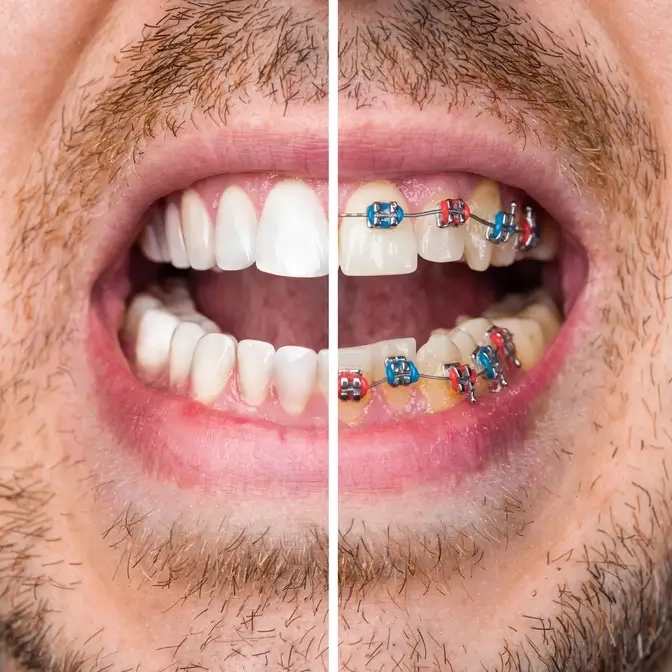
Braces use brackets bonded to each tooth, connected by wires and bands. The wires exert constant pressure on your teeth, gradually moving them into alignment. You visit your orthodontist every 4-6 weeks for adjustments and tightening.
Braces come in three main types:
Metal braces – Traditional stainless steel brackets. Most affordable, very visible, extremely durable.
Ceramic braces – Tooth-colored ceramic brackets that blend in. More expensive, slightly more fragile than metal, less visible.
Lingual braces – Placed behind your teeth so they’re invisible from the front. Most expensive, hardest to clean, steepest learning curve with speech.
Invisalign: How It Works
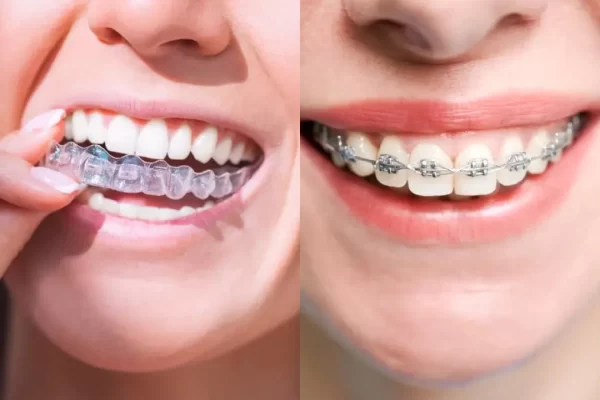
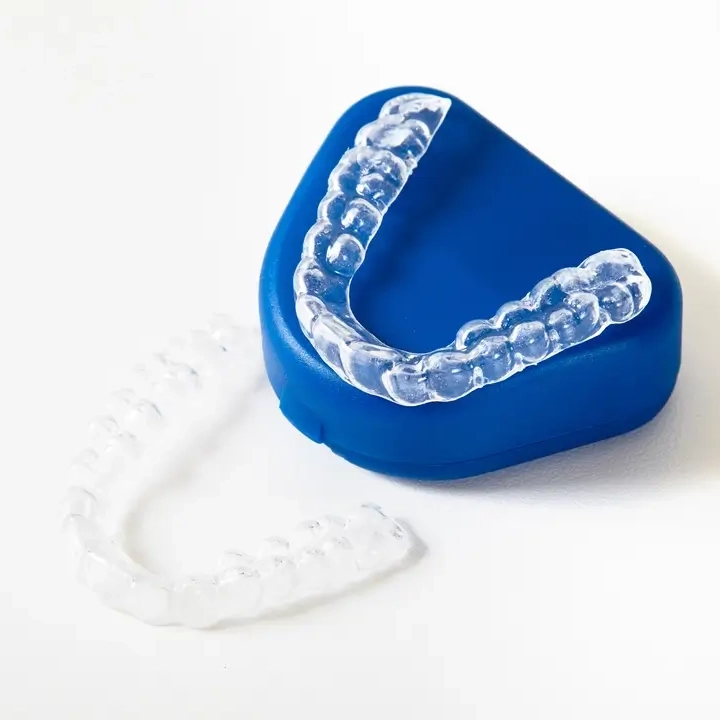
Invisalign is a brand name (though people use it generically now). It uses a series of clear, removable plastic aligners. Each aligner is slightly different, guiding your teeth incrementally toward the final position. You wear each aligner for 7-10 days, then switch to the next one in the series. No wires, no brackets, no trips to the orthodontist for adjustments (fewer, anyway).
There are competitor brands (Smile Direct Club, Byte, Candid), but Invisalign is the market leader and most established brand.
Invisalign vs Braces: Cost Comparison
This is usually the first decision driver. Here’s what you actually pay:
Traditional Braces Cost
Metal braces: $3,000-$7,000 Ceramic braces: $4,000-$8,000 Lingual braces: $8,000-$12,000
These prices are for the full treatment (usually 18-24 months), including all appointments, adjustments, and retainer.
National average for metal braces: $5,000-$6,000
Invisalign Cost
Standard Invisalign: $3,500-$8,000 Invisalign Lite (minor corrections only): $2,000-$3,500 Invisalign First (kids): $2,500-$5,000
National average for Invisalign: $4,500-$6,500
Direct Comparison: Metal Braces vs Invisalign
For the most common comparison (metal braces vs standard Invisalign):
Metal braces: $5,000-$6,000 average Invisalign: $4,500-$6,500 average
Verdict: They’re roughly the same price. Invisalign might be slightly cheaper or slightly more expensive depending on your provider and case complexity. Price shouldn’t be the deciding factor—they’re competitive.
How Much Does Invisalign Cost Without Insurance?
Most patients pay the full price out of pocket. The average is $4,500-$6,500 for treatment that lasts 12-24 months.
Payment plans are standard: most orthodontists offer 0% interest financing spread over 12-24 months, so you’re paying $200-$300/month instead of a lump sum.
How Much Does Invisalign Cost With Insurance?
Insurance coverage for Invisalign (and braces) varies:
Typical coverage: 50% of treatment cost after deductible Annual maximum: Often $1,000-$2,000 Lifetime maximum: Many plans cap orthodontia at $1,500-$2,000 total
Real example:
- Invisalign cost: $5,500
- Your deductible: $1,000 (probably already met for the year)
- Insurance covers 50% of major restorative: $2,750
- Your out-of-pocket: $2,750
Many orthodontia plans cover both braces and Invisalign similarly, though some plans specifically exclude Invisalign (treating it as cosmetic while covering braces). Check your specific plan.
Invisalign vs Braces: Effectiveness & Speed
Both work. The question is: do they work equally well, and how fast?
Effectiveness: Can Both Achieve Your Goals?
Metal braces: Can correct virtually any orthodontic issue, including severe cases, bite problems, and complex rotations.
Invisalign: Works well for mild-to-moderate cases. For severe bite problems, complex rotations, or significant crowding, braces are often more effective.
Verdict: For straightforward crowding and alignment issues, both are equally effective. For complex cases, braces win.
Treatment Speed: How Long Does It Take?
Metal braces: 18-24 months average (range: 12-36 months) Invisalign: 12-18 months average (range: 6-24 months)
Invisalign can be faster because aligners apply consistent pressure and treatment planning is optimized from the start. Braces require periodic adjustments which sometimes stall progress.
However, Invisalign’s speed depends entirely on patient compliance. If you don’t wear them 20-22 hours daily, treatment time extends.
Verdict: Invisalign is slightly faster on average, but only if you’re diligent about wearing them.
Invisalign vs Braces: Comfort & Daily Life
This is where the choice gets personal. How you experience orthodontia day-to-day matters.
Appearance
Metal braces: Highly visible. You look like you have braces. No way around it. Some people embrace this; others hate it.
Ceramic braces: Much less visible. From a distance, they blend in. Close up, they’re noticeable but less obvious than metal.
Lingual braces: Invisible from the front. The most aesthetic option but also most expensive and uncomfortable.
Invisalign: Practically invisible. Most people won’t notice unless they’re looking closely. This is a major advantage for self-conscious adults.
Verdict: For appearance, Invisalign and lingual braces win, ceramic is middle-ground, metal is most visible.
Eating & Drinking
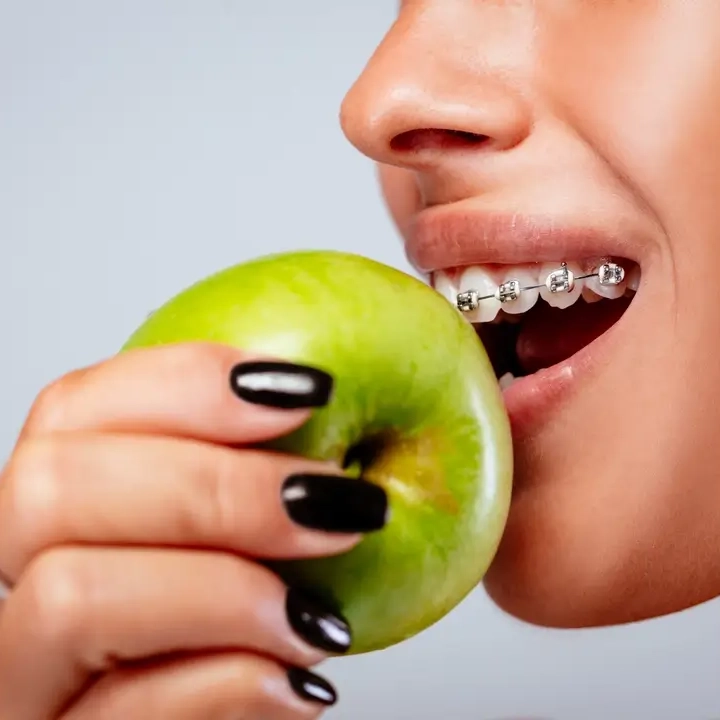
Metal braces: You have to remove elastics and brackets can catch food. Hard, sticky, crunchy foods are off-limits (popcorn, nuts, caramel, gum). You get used to it, but it’s an adjustment.
Ceramic braces: Same restrictions as metal braces.
Lingual braces: Same restrictions, but harder to clean your teeth with braces on the back.
Invisalign: You remove the aligners to eat and drink (except water). No food restrictions. You eat normally, then brush and put aligners back in. This is a major quality-of-life advantage.
Verdict: Invisalign wins on eating freedom. Braces require dietary adjustments.
Oral Hygiene & Cleaning
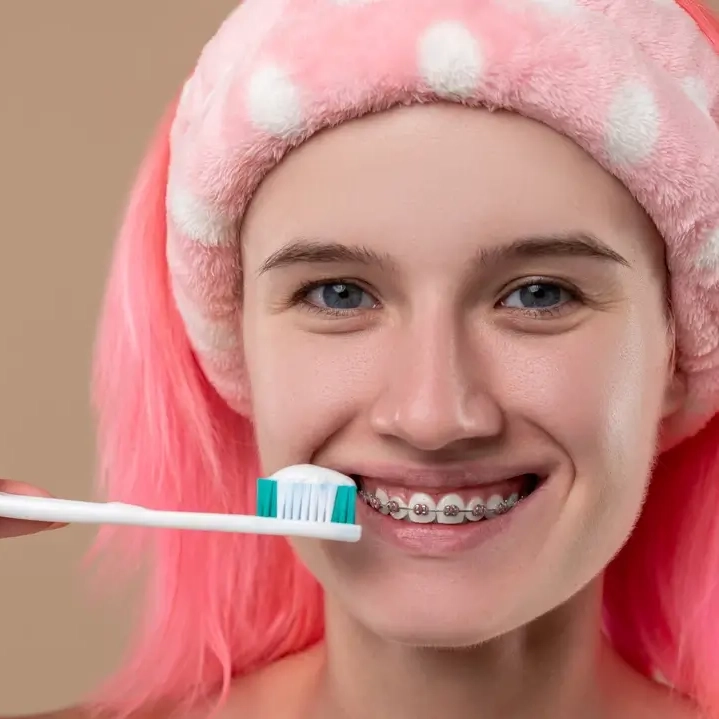
Metal braces: Harder to brush and floss around brackets. Food particles get trapped. Requires special flossing tools (water flossers or threaders). Takes longer to clean properly.
Ceramic braces: Same challenges as metal.
Lingual braces: Much harder to clean because braces are on the back of your teeth. Requires meticulous technique.
Invisalign: You remove aligners to brush and floss normally. No special tools needed. Much easier to maintain oral hygiene.
Verdict: Invisalign is easiest, braces require more effort.
Pain & Discomfort
Metal braces: Initial soreness when first placed, then minor soreness for 24-48 hours after each adjustment. Brackets can irritate your cheeks and lips.
Ceramic braces: Similar to metal but brackets can be slightly more fragile.
Lingual braces: More discomfort because they’re on the back, rub your tongue, and affect speech initially.
Invisalign: Mild soreness for 1-2 days after switching to a new aligner. Minimal to no mouth irritation. Generally more comfortable overall.
Verdict: Invisalign is most comfortable, metal braces second, lingual braces most uncomfortable.
Speech & Adjustments
Metal braces: No effect on speech. Quick adjustment period (days).
Ceramic braces: No effect on speech.
Lingual braces: Significant effect on speech initially (you sound different, especially with S sounds). Takes weeks to adapt. Some people never fully adjust.
Invisalign: Minimal effect on speech, usually only noticeable to you. Adjustment period measured in hours or days.
Verdict: Metal and ceramic braces: no impact. Lingual braces: significant impact. Invisalign: minimal impact.

Invisalign vs Braces: Lifestyle Impact
Sports & Physical Activity
Braces: You can play sports, but contact sports risk bracket damage. Mouthguards are awkward. If you get hit in the mouth, brackets can cause lip lacerations.
Invisalign: You remove aligners during sports. No risk to the aligners from impact. Just wear your normal mouthguard. This is a significant advantage for athletes.
Professional Appearance
Braces: Some professional environments are more judgmental about visible braces. Sales roles, customer-facing positions, and certain corporate cultures. (This is unfair, but it’s reality.)
Invisalign: Less visible, so less workplace impact.
Social Confidence
Braces: Some adults feel self-conscious. Others own it and don’t care. Depends on the person.
Invisalign: Minimal social impact due to invisibility. Better for socially anxious patients.
Travel & Remote Appointments
Braces: Requires in-person appointments for adjustments. Can’t skip appointments without prolonging treatment. Travel complicates this.
Invisalign: Some providers (Smile Direct Club, Byte) offer remote monitoring. Some in-person providers also allow extended appointment spacing. More flexible for frequent travelers.
Which Is Right for You? Decision Framework
Choose Braces If:
✓ You have a severe or complex orthodontic case
✓ You have compliance concerns (won’t remember to wear aligners)
✓ You want to minimize out-of-pocket cost (slightly cheaper sometimes)
✓ You don’t mind visible braces
✓ You prefer the “set it and forget it” approach (no daily responsibility)
✓ You’re a kid or teen (easier to monitor compliance)
✓ Your insurance covers braces better than Invisalign
Choose Invisalign If:
✓ You have mild-to-moderate crowding or alignment issues
✓ You want invisibility (dating, work, social confidence)
✓ You have dietary preferences (want to eat normally)
✓ You want easier cleaning and better oral hygiene
✓ You prioritize comfort over everything
✓ You play contact sports
✓ You travel frequently
✓ You’re disciplined about wearing them 20-22 hours daily
✓ You’re an adult concerned about appearance
Hybrid Approach: Braces + Retainers
Some patients do braces first (for major movement), then switch to Invisalign aligners (for fine-tuning). This is less common but an option if you want speed of braces with final refinement of Invisalign.
Cost Breakdown: What's Included?
Whether you choose braces or Invisalign, here’s what’s typically included:
Initial exam & treatment planning: $0-$500 Ongoing care & appointments: Included in treatment cost Adjustments (for braces): Included Aligners (for Invisalign): Usually 30-50 sets included Retainers: Usually one or two retainers included Emergency care: Usually included, though replacement retainers cost extra ($100-$300)
What’s NOT included:
- Replacement retainers ($100-$300 each)
- Replacement aligners beyond the initial series
- Tooth extractions (if needed): $300-$1,500 per tooth
- Severe repairs (bracket damage, lost aligners)
Insurance Coverage: Both Braces & Invisalign
Most orthodontia plans cover both braces and Invisalign similarly, though some exclude Invisalign or cover it at a lower rate.
Typical coverage:
- Percentage covered: 50% of treatment cost
- Annual maximum: $1,000-$2,000
- Lifetime maximum: $1,500-$3,000 (applied across all orthodontia)
- Deductible: Usually waived for orthodontia or waived after being met elsewhere
Example:
- Braces or Invisalign: $5,500
- Insurance covers 50% lifetime orthodontia up to $2,000
- Insurance pays: $2,000
- You pay: $3,500
After insurance, most patients pay $2,500-$4,000 out of pocket for either braces or Invisalign.
Finding Orthodontists With Transparent Pricing
Not all orthodontists are upfront about costs, and prices vary significantly even within the same city.
Red flags:
- Won’t quote a price without a consultation ($200-$300 fee)
- Quote changes after consultation
- Staff can’t explain insurance coverage clearly
- No payment plan options offered
- Pressure to pay in full upfront
Green flags:
- Provides cost estimate before or during free consultation
- Submits to insurance for pre-authorization
- Clear itemized breakdown (exam, treatment, retainers, emergency care)
- Multiple payment plan options (0% interest common)
- Transparent about what’s included and what costs extra
- Reviews mention fair pricing and no surprises
Questions to ask when comparing orthodontists:
- “What’s your all-in treatment cost for my specific case?” (Ask for a range if they can’t be exact yet)
- “Will you submit to my insurance for pre-authorization?” (This tells you exactly what insurance will pay)
- “What’s included in the treatment cost?” (Exams, retainers, emergency care, etc.)
- “What’s the payment plan options?” (Most offer monthly payments)
- “How long is treatment expected to take?” (Affects total cost and planning)
- “Are replacement retainers included or extra?” (Important for long-term costs)
- “What happens if I move or need to switch providers?” (Transfer fees vary)
Using Vosita to Find Orthodontists
Finding an orthodontist who’s transparent about pricing, accepts your insurance, and has real availability shouldn’t be a hassle—but it often is.
Vosita makes it easier by:
- Filtering by insurance acceptance – Only see orthodontists who take your plan, no guessing about network status
- Transparent pricing practices – Orthodontists on the platform commit to upfront cost transparency
- Real appointment availability – See actual open slots and book immediately instead of waiting weeks for callbacks
- Verified patient reviews – Read real patient experiences about cost transparency, treatment speed, and whether recommendations matched reality
- Detailed provider profiles – See credentials, specialties, whether they offer braces, Invisalign, or both, and years of experience
- Insurance pre-authorization help – Dentists on the platform know how to navigate insurance coverage and submit pre-authorizations
Instead of calling multiple orthodontists, explaining your situation each time, waiting days for callbacks, and still not knowing if they accept your insurance, you browse options that accept your plan, read verified reviews, and book your consultation online.
For a decision this important—and expensive—transparency and real patient feedback matter.
Invisalign vs Braces: The Bottom Line
They’re roughly the same price. (~$5,000-$6,000 average)
Both work for most people. Braces are more effective for complex cases; Invisalign is adequate for mild-to-moderate cases.
Invisalign offers better lifestyle quality: easier eating, simpler cleaning, better appearance, more comfort, more flexibility.
Braces offer more certainty: no compliance required, works for any case, “set it and forget it” approach.
The real decision isn’t braces vs Invisalign. It’s:
- How serious is your orthodontic case? (Complex → braces; simple → either)
- How disciplined are you? (Can commit to wearing aligners 20+ hours daily → Invisalign; can’t → braces)
- What matters most to you? (Appearance → Invisalign; simplicity → braces)
- What’s your professional/social situation? (Customer-facing role, dating, social confidence → Invisalign; remote job → either)
For most adults with mild-to-moderate crowding, Invisalign is the right choice because the lifestyle benefits outweigh any advantages braces offer. For kids, teens, or complex cases, braces are often the better choice.
Find an orthodontist with transparent pricing and available appointments. Get pre-authorization from your insurance. Then commit to whichever option you choose. Both work—the key is consistency.
FAQ: Invisalign vs Braces
How much does Invisalign cost compared to braces? They’re roughly the same price. Metal braces average $5,000-$6,000, Invisalign averages $4,500-$6,500. Cost shouldn’t be the deciding factor between them. Payment plans are standard for both, spreading the cost over 12-24 months.
How much does Invisalign cost? Invisalign typically costs $3,500-$8,000 depending on treatment complexity. Standard Invisalign is $4,500-$6,500 average. Invisalign Lite (minor cases only) is $2,000-$3,500. Most orthodontists offer 0% interest financing, so you pay $200-$300/month instead of a lump sum.
How much are braces? Metal braces cost $3,000-$7,000 (average $5,000-$6,000). Ceramic braces cost $4,000-$8,000. Lingual braces (behind teeth) cost $8,000-$12,000. Prices vary by provider, complexity, and geographic location. Payment plans are standard.
Is Invisalign faster than braces? Invisalign can be faster (12-18 months average vs. 18-24 months for braces), but only if you wear aligners 20-22 hours daily. Inconsistent wear extends treatment time significantly. Braces work at their own pace regardless of patient compliance.
Can Invisalign fix severe crowding? No. Invisalign works for mild-to-moderate crowding. Severe crowding, bite problems, or complex rotations require traditional braces. Your orthodontist can assess whether your case is suitable for Invisalign or requires braces.
Is Invisalign covered by insurance? Yes, most orthodontia plans cover Invisalign similarly to braces (50% coverage typical). Some older plans exclude Invisalign or cover it at a lower rate. Check your specific plan. Most plans have annual maximums ($1,000-$2,000) and lifetime maximums ($1,500-$3,000) for all orthodontia.
How much does Invisalign cost with insurance? After insurance typically pays 50% of cost, you pay $2,500-$4,000 out of pocket for Invisalign. This depends on your plan’s coverage percentage, deductible status, and annual/lifetime maximums. Get pre-authorization from your insurance before starting to know your exact out-of-pocket cost.
Does Invisalign hurt? Invisalign causes minimal pain. You experience mild soreness for 1-2 days after switching to a new aligner (similar to slight pressure). No brackets to irritate your cheeks like with braces. Most patients describe it as “pressure” rather than “pain.”
Can you play sports with Invisalign? Yes. You remove Invisalign before playing sports, so there’s no risk of damage to the aligners or injury to your mouth from them. You can wear your normal mouthguard. This is a major advantage for athletes compared to braces, which require awkward modified mouthguards.
Can you eat with Invisalign? Yes. You remove aligners before eating, so no food restrictions. Eat whatever you want normally, then brush your teeth and put aligners back in. This is a major quality-of-life advantage over braces, which restrict hard, sticky, and crunchy foods.
Do you have to wear Invisalign all the time? Yes, you need to wear Invisalign 20-22 hours daily for treatment to stay on schedule. You remove them only for eating and drinking (except water). Not wearing them enough extends treatment time and can require additional trays, increasing cost.
Can you drink coffee with Invisalign? Not while wearing aligners. Hot beverages can warp clear aligners, and dark drinks can stain them. Remove your aligners before having coffee or other staining drinks. Plain water is fine while wearing them.
Which is better, braces or Invisalign? For adults with mild-to-moderate crowding who care about appearance, comfort, and eating ease: Invisalign. For kids, teens, severe crowding, or patients concerned about compliance: braces. Both work equally well for appropriate cases. The best choice depends on your specific situation and priorities.
How do I choose between braces and Invisalign? Consider: severity of your case (complex → braces; simple → either), your discipline about wearing aligners daily (strict → Invisalign; can’t commit → braces), what matters most (appearance → Invisalign; simplicity → braces), and your lifestyle (sports, dating, work environment). Consult an orthodontist who offers both and can recommend the best fit for your specific case.
Meta Description (160 characters): Invisalign vs Braces: Compare costs ($5-6K each), effectiveness, comfort, and lifestyle impact. Find out which is right for you and book with transparent orthodontists on Vosita.
SEO Tips from Shehryar:
- Add interlinks to the previous dental articles
- Add FAQs schema
- Add Article/Blog schema
We have to install RankMath. I will do it and then I will show you how we can add FAQs schema.