

Does Dental Insurance Cover Implants? What You Need to Know (2026)
You’ve decided dental implants are the right choice for your smile. Then comes the question that stops you dead: Does dental insurance cover implants?
The honest answer? For most people, no—or not enough to make a meaningful difference. But the real situation is more nuanced than that, and understanding exactly what your insurance will and won’t cover can save you thousands of dollars.
This guide walks through how dental insurance treats implants, what you might be covered for, how to get a pre-authorization, and what to do if your plan won’t cover them.
Does Dental Insurance Cover Implants? The Short Answer
Most traditional dental insurance does not cover dental implants, or covers only 0-15% of the cost.
Here’s why: Insurance companies classify implants as either elective, cosmetic, or restorative depending on the plan. Unlike fillings or cleanings (which are considered preventive), implants fall into a gray area that most insurers refuse to fully cover.
According to dental insurance guidelines, implants are often deemed medically unnecessary when alternative tooth replacement options exist—like bridges or dentures. Since those alternatives are cheaper (for the insurance company), they lobby hard to avoid covering the more expensive option.
The result? Dental insurance for implants is rare and limited.
Some plans offer partial coverage (10-15%), but this usually comes with:
- High deductibles you have to meet first
- Annual maximums that cap your benefit ($1,000-$2,000)
- Waiting periods before implant coverage kicks in (sometimes up to 12 months)
- Exclusions that make implants uncovered regardless
What Dental Insurance Actually Covers for Implants
If your plan does have implant coverage, here’s what’s typically included and excluded:
What might be covered (sometimes):
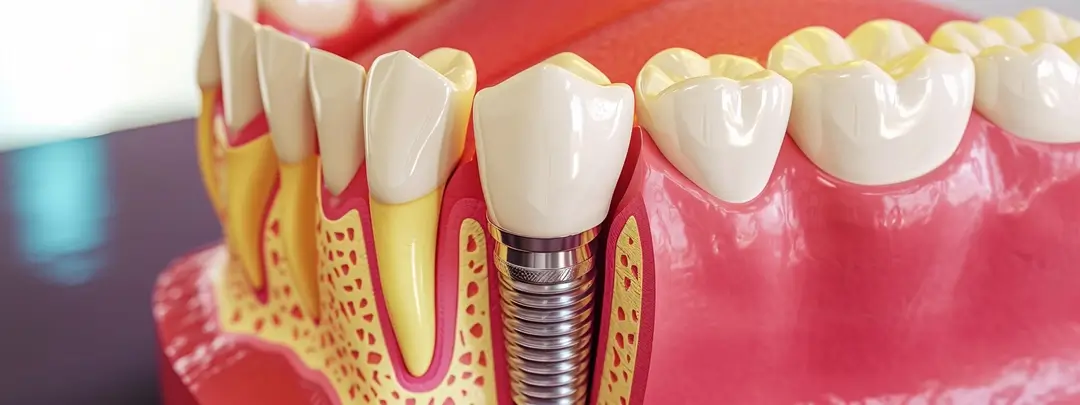
- The crown (the visible tooth portion) – often covered at the same rate as a regular crown (usually 50% after deductible)
- The abutment (connector piece) – occasionally covered as part of crown coverage
- Preparatory work – some plans cover extractions, bone grafting, or gum treatment if medically necessary
- Implant fixture removal – if an implant fails and needs to be removed
What’s almost never covered:
- The implant fixture itself (the titanium post) – this is the most expensive component and almost no plan covers it
- Bone grafting – classified as elective, even though it’s often necessary
- Sinus lifts – same reasoning as bone grafting
- Specialized surgical procedures – anything beyond basic placement
- Premium materials – if you choose zirconia over porcelain-fused-to-metal
What depends on your specific plan:
- Follow-up care and adjustments
- Replacement crowns
- Implant removal
Breaking Down Coverage by Insurance Type

Different types of insurance handle implants differently. Here’s what to expect:
Traditional Dental Insurance (PPO/HMO)
Coverage rate: 0-15% for implants themselves
This is the most common type of dental insurance, and it’s the worst for implant coverage. Most traditional plans have specific language excluding implants or capping them at 50% of a crown cost only (not the implant fixture).
Example: Your plan covers 50% of crowns after a $1,000 deductible and annual max is $2,000. Your implant with crown costs $4,500. You pay the $1,000 deductible first. Then insurance might cover $500 of the crown (half of $1,000, which is all they’ll recognize), paying just $500 total. You pay $4,000 out of pocket.
Many traditional plans also have a 12-month waiting period before implant benefits activate, or they exclude implants entirely.
What to do: Check your policy document specifically for “implant” language, or call and ask directly if implants are covered.
Discount Dental Plans (Not Insurance)
Coverage rate: 10-20% discount if you’re a member
These aren’t insurance—they’re membership plans where you pay a flat fee ($80-$200/year) for access to a network of dentists who give members discounts.
Some discount plans offer 10-20% off implants through their network dentists. It’s not coverage, but it’s money off.
Example: An implant costs $4,500. With a 15% discount through your plan’s network, you pay $3,825 instead. You save $675.
What to do: If you’re uninsured, a discount plan might be worth it. Compare the annual fee against how much you’ll save on your implant.
Employer-Sponsored Plans
Coverage rate: Varies widely, 0-30%
Some progressive employers offer dental plans with better implant coverage than standard insurance. Tech companies, larger corporations, and unionized jobs sometimes have plans covering 20-30% of implants.
The catch? These plans are rare. Most employer-sponsored plans are standard PPOs with typical implant exclusions.
What to do: Check your benefits documentation or call your HR/benefits department and specifically ask about implant coverage.
Medicare
Coverage rate: 0% for implants
Medicare does not cover dental implants, dental crowns, bridges, dentures, or most routine dental care. This is one of the biggest gaps in Medicare coverage and affects millions of seniors.
Important note: Some Medicare Advantage plans (Part C) include dental coverage, but these typically don’t cover implants either. They usually max out at $1,000-$2,000 annually for cleanings, exams, and basic restorative work.
What to do: If you’re on Medicare, don’t count on any coverage. Look into dental discount plans or state-specific Medicaid if you qualify.
Medicaid
Coverage rate: 0-25%, varies by state
Medicaid coverage for dental implants is extremely limited and varies dramatically by state. Most state Medicaid programs cover emergency dental care (pain, infection) and basic restorative work, but exclude implants.
A few states (like California and some others) have started covering implants for specific circumstances like speech impairment or severe functional loss, but this is the exception, not the rule.
What to do: Contact your state’s Medicaid program and ask specifically if implants are covered. You’ll likely need to have documentation of medical necessity, not just cosmetic desire.
State-Specific Health Plans
Coverage rate: 0-50%, varies significantly
Some states have health plans or programs for uninsured/underinsured residents. Coverage varies wildly. A few states have progressive dental coverage; most don’t cover implants.
What to do: Check if your state offers a health plan with dental coverage and ask about implants specifically.
Does Medicare Cover Dental Implants? The Reality for Seniors

This is a frequent question because seniors often have the most need for implants and the least ability to pay out of pocket.
The answer: Medicare does not cover dental implants, period.
Medicare Part A (hospital insurance) and Part B (medical insurance) have specific language excluding dental care. The original Medicare program treats dental as outside its scope.
What about Medicare Advantage plans?
Some Medicare Advantage plans (Part C) include dental benefits, but most don’t cover implants. They offer annual maximums ($1,000-$2,000 typically) for routine care like cleanings, fillings, and extractions—not implants.
What about if implants are medically necessary?
Even if you make the case that implants are medically necessary (for speech, nutrition, or appearance affecting mental health), Medicare won’t cover them. There’s no pathway to medical necessity approval for dental implants under Medicare.
Options for seniors without Medicare coverage:
- Medicaid – If you qualify based on income, your state’s Medicaid might offer limited dental coverage
- Dental discount plans – Senior-specific discount plans often cost less ($40-$80/year)
- Dental schools – University dental programs often serve seniors at reduced rates
- Charitable programs – Some nonprofits assist low-income seniors with dental implants
- Pay out of pocket – Many seniors set aside funds or ask family to help
- Dental tourism – Some seniors travel to Mexico or Costa Rica for lower costs
Dental Insurance Waiting Periods: What You Need to Know

Many dental insurance plans have waiting periods before implant coverage becomes available. This is important if you’re considering switching plans.
Typical waiting periods:
- Preventive care: Covered immediately (cleanings, exams)
- Basic restorative: 6-12 months (fillings, extractions)
- Major restorative (including implants): 12 months
- Orthodontics: 12-24 months
What this means: If you enroll in a new plan today and implants are covered, you might not be able to use that coverage for 12 months. This is designed to prevent people from signing up right before they need expensive work.
Exception: If you had continuous coverage with your previous plan and switch to a new plan, some insurers will waive or reduce waiting periods. This is called “benefit carryover” and it’s not universal.
What to do: Check your plan documents for waiting period information. If you need implants soon, this could change which plan is best for you.
How to Get a Pre-Authorization for Implants
Even if your plan claims to cover implants, getting pre-authorization before you have the work done is critical. Pre-authorization tells you exactly what your insurance will pay.
Here’s how to get one:
Step 1: Get a treatment plan from your dentist
Your dentist needs to provide:
- Detailed description of the procedure
- Specific diagnosis (tooth loss, failure, etc.)
- Cost breakdown (implant, abutment, crown, any grafts)
- Procedure codes (like D6010 for implant body, D6012 for abutment, etc.)
Step 2: Submit for pre-authorization
Some dentists will submit this for you. If not, you can submit it yourself. Contact your insurance with:
- Your member ID and personal information
- The treatment plan from your dentist
- A request for pre-authorization (sometimes called “pre-determination”)
Step 3: Wait for a response
Insurance typically responds within 10-15 business days. They’ll send a letter explaining:
- Whether they consider the procedure covered
- What percentage they’ll pay
- What your deductible and maximum apply
- Any exclusions or conditions
Step 4: Request clarification if needed
If the response is unclear, call your insurance and ask specific questions:
- “Will you cover the implant fixture itself, or just the crown?”
- “Does this count toward my annual maximum?”
- “What’s my patient responsibility after insurance?”
- “If something goes wrong, what’s covered?”
Critical point: Pre-authorization is NOT a guarantee of payment. Insurance can still deny coverage after the fact if they determine the procedure wasn’t covered. But it gives you the best information available before you commit.
What to Do If Your Insurance Won't Cover Implants

Most people will fall into this category. Here’s your action plan:
Option 1: Challenge the Denial (if you get denied)
If insurance denies coverage, you have the right to appeal. The appeals process varies, but typically:
- Request a written explanation of the denial
- File an appeal with supporting documentation (like a letter from your dentist explaining medical necessity)
- Request peer-to-peer review (your dentist talks directly with the insurance’s dental director)
- If that fails, request an external appeal through your state’s insurance commissioner
About 20-30% of dental insurance denials are overturned on appeal, so it’s worth trying if you have a strong case.
Option 2: Negotiate With Your Dentist
Even if insurance won’t cover implants, dentists can sometimes negotiate. Ask about:
- Bundled pricing: “What if I do extractions and implants together? Can I get a package deal?”
- Payment plans: Many dentists offer 0% interest financing for 12-24 months
- Cash discounts: Some practices give 10-15% discounts for full payment upfront
- Referral discounts: If your dentist has partnerships or referral relationships with specialists, you might get reduced rates
Option 3: Use Flexible Spending or HSA
If your employer offers an FSA (Flexible Spending Account) or HSA (Health Savings Account), you can set aside pre-tax dollars specifically for dental work.
- FSA: You can set aside up to $3,300/year (2024) in pre-tax money for medical expenses, including implants. You save your tax bracket percentage (15-37% typically).
- HSA: Similar to FSA, but with higher limits ($4,150/year individual, $8,300/family) and carries over year to year.
Example: If you’re in the 25% tax bracket and need $4,500 for implants, using an HSA saves you $1,125. Your net cost is $3,375 instead of $4,500.
What to do: Check with your employer’s HR department if they offer FSA or HSA options. Enroll during open enrollment.
Option 4: Explore Discount Plans and Memberships
Dental discount plans (not insurance) can offer 10-20% off implants through participating dentists. They cost $40-$200/year depending on the plan.
Organizations like:
- Dental Discount Plus
- Smile Savers
- Spirit Dental
These aren’t insurance and won’t pay dentists directly, but you’ll get member discounts when you pay.
Option 5: Look Into Dental School Programs
Dental schools at major universities offer implants at significantly reduced costs (often 50-60% off normal pricing) performed by advanced dental students under faculty supervision.
Quality: The work is done by students, but under close supervision by experienced faculty. For straightforward cases, the quality is excellent.
Time: Expect treatment to take longer than at a private practice (students have more limitations and work more slowly).
Availability: Dental schools usually have long wait lists, sometimes 3-6 months.
Examples:
- NYU College of Dentistry
- University of Pennsylvania School of Dental Medicine
- University of Michigan School of Dentistry
Call your local dental school and ask about implant programs.
Option 6: Dental Tourism
Some patients travel to Mexico, Costa Rica, or other countries for implants at 30-50% lower costs.
Pros: Significant cost savings (potentially $3,000-$4,000) Cons: Difficulty with follow-up care in the US, potential complications, different standards of care, travel costs
If you consider this, verify credentials thoroughly and ensure you have a plan for any complications.
Dental Insurance for Implants: What the Future Looks Like

The landscape is slowly changing. Some newer, progressive plans are beginning to cover implants as alternative tooth replacement options become more mainstream and costs come down.
However, for most patients in 2026, coverage remains limited.
What might change:
- Employer-sponsored plans may improve coverage to attract talent
- Dental schools may expand programs as demand grows
- Some states may expand Medicaid coverage
- Private insurance may shift as implants become standard care
What probably won’t change:
- Medicare coverage (budget constraints are significant)
- Traditional insurance covering implants fully (they prefer cheaper alternatives)
- Plans removing waiting periods (attracts risk)
Finding Transparent Dentists Who Accept Insurance

The last piece of the puzzle: finding a dentist who’s upfront about insurance coverage and helps you navigate it.
Not all dentists are created equal when it comes to insurance. Some will:
- Pressure you to proceed without getting pre-authorization
- Quote prices without breaking down what insurance might cover
- Make you guess about your out-of-pocket cost
- Have staff who don’t know your plan’s coverage
What you want:
- A dentist who submits pre-authorizations before you commit
- Clear itemized quotes showing what they’re charging for each component
- Staff who can explain your insurance coverage in plain language
- Transparent communication about your financial responsibility upfront
This is exactly why platforms like Vosita exist. You can:
- Filter dentists by insurance acceptance so you only see providers who take your plan
- See real availability and book appointments without playing phone tag
- Read verified reviews from patients about billing and insurance experience
- Compare practices in your area before committing to one
- Book confidence knowing the dentist accepts your insurance and has transparent practices
Instead of calling five offices and explaining your situation five times, you browse dentists who’ve already confirmed they accept your insurance and have streamlined booking.
Key Takeaways: Does Dental Insurance Cover Implants?
- Most plans don’t. Traditional dental insurance covers 0-15% of implant costs, if anything.
- Medicare doesn’t. Seniors on Medicare should not expect coverage.
- Medicaid varies by state. Some states offer limited coverage; most don’t cover implants.
- Pre-authorization is essential. Always get pre-authorization before proceeding to know exactly what your plan covers.
- You have alternatives. Pre-tax savings accounts, discount plans, payment plans, and dental schools can make implants more affordable.
- Plan ahead. If implants are in your future, timing matters. Waiting periods, annual maximums, and plan changes can all affect your cost.
- Find the right dentist. A dentist who submits pre-authorizations, explains costs clearly, and helps navigate insurance will save you money and stress.
Start by finding a dentist who’s transparent about insurance and costs. That’s the first step toward an implant plan that actually works with your budget.
FAQ: Does Dental Insurance Cover Implants?
Does any dental insurance cover implants? Some plans offer limited coverage (10-15% of implant costs), but most traditional dental insurance does not cover implants. They’re often classified as elective or cosmetic. Employer-sponsored plans occasionally offer better coverage (15-30%), but this is rare. Check your specific plan document or call and ask directly.
What part of a dental implant does insurance cover? If covered at all, insurance typically covers part of the crown (the visible tooth portion), sometimes at 50% after meeting your deductible. The implant fixture itself (the most expensive component) is almost never covered. Bone grafts, sinus lifts, and other preparatory procedures are almost never covered.
Does Medicare cover dental implants? No. Original Medicare (Parts A and B) does not cover dental implants, dental crowns, bridges, dentures, or most dental care. Medicare Advantage plans (Part C) sometimes include dental benefits, but these rarely cover implants. Seniors should not expect Medicare coverage for implants.
Does Medicaid cover dental implants? Medicaid coverage for implants varies by state. Most state programs do not cover implants, focusing instead on emergency care and basic procedures. A few states have started covering implants in specific circumstances, but coverage remains extremely limited. Contact your state’s Medicaid program to ask about your specific eligibility.
How do I find out if my dental insurance covers implants? Check your plan documents for language about “implants,” “prosthetics,” or “major restorative care.” If unclear, call your insurance directly and ask specifically: “Does my plan cover dental implants?” Ask if there are waiting periods, annual maximums, or exclusions. Request a pre-authorization before proceeding with any treatment.
What’s a dental insurance waiting period for implants? A waiting period is how long you must wait after enrolling in a plan before certain benefits activate. For implants, waiting periods are typically 12 months. This means if you enroll today and implants are covered, you might not be able to use that coverage until 12 months later. Check your plan for specific waiting periods.
Should I get a pre-authorization for dental implants? Absolutely, yes. Ask your dentist to submit a pre-authorization request to your insurance before starting treatment. This tells you exactly what your plan will cover, your deductible, annual maximum, and your patient responsibility. Pre-authorization isn’t a guarantee of payment, but it provides critical information before you commit to thousands of dollars in treatment.
What if my insurance denies my implant claim? You have the right to appeal. Request a written explanation of the denial, then file an appeal with supporting documentation from your dentist. You can request a peer-to-peer review (your dentist talking with the insurance’s dental director). About 20-30% of dental denials are overturned on appeal. Contact your state’s insurance commissioner if you believe the denial is unfair.
Can I use my FSA or HSA to pay for dental implants? Yes. FSA and HSA funds can be used for qualified medical expenses including dental implants. You can set aside pre-tax money ($3,300/year for FSA, up to $8,300/year for HSA), which effectively reduces your cost by your tax bracket percentage. Check with your employer’s HR department about enrollment.
What are dental discount plans, and do they cover implants? Dental discount plans are membership programs (not insurance) that offer 10-20% discounts through network dentists. They cost $40-$200/year. They won’t pay dentists directly, but members get discounts on implants and other procedures. Useful if you’re uninsured or your insurance doesn’t cover implants.
How much will I pay out of pocket for implants if insurance won’t cover them? This varies widely. Single tooth implants typically cost $1,500-$6,000 out of pocket. Complex cases with bone grafting or multiple implants can exceed $7,000-$30,000. You can often negotiate payment plans (0% interest for 12-24 months), get cash discounts, or explore dental schools for 50-60% off pricing.
Are there other ways to afford implants if insurance doesn’t cover them? Yes. Options include: using FSA/HSA pre-tax savings, dental discount memberships, dentist payment plans, cash discounts, dental school programs (50-60% off), charitable programs, asking family to contribute, dental tourism, or exploring employer-sponsored plan options if you can switch plans.
Meta Description (160 characters): Does dental insurance cover implants? Most plans don’t. Learn what insurance covers, Medicare facts, pre-authorization tips, and affordable options on Vosita.
SEO Focus: Primary keyword “does dental insurance cover implants” + supporting keywords naturally integrated